

Caller Ring Back Tunes (CRBT) in Africa: The Underrated Music Monetization Engine
February 4, 2026

Before streaming platforms dominated Africa’s music landscape, millions of listeners discovered new songs through an unexpected channel: phone calls. Caller Ring Back Tunes in Africa transformed the standard ringing tone into a powerful music discovery and monetization tool, creating one of the continent’s earliest large-scale digital music businesses.
While streaming services now lead global industry conversations, CRBT music monetization in Africa remains a meaningful revenue stream. Its continued relevance reflects how mobile infrastructure, telecom music licensing in Africa, and evolving ringback tones revenue for artists shape the continent’s music economy—making it a critical channel for sustainable African mobile music distribution.
How CRBT Services Work in Africa
In most African markets, mobile network operators partner with content aggregators or directly with rights holders to offer CRBT services. Subscribers pay a recurring fee, typically to activate and maintain their chosen tune.
Revenue generated from these subscriptions is distributed among multiple stakeholders:
• Mobile network operators (infrastructure and billing)
• Content aggregators or service providers (platform management)
• Music rights holders (composers, publishers, recording artists, labels)
Understanding Music Rights in CRBT Licensing
Two distinct copyrights must be cleared for every CRBT:
1. Musical composition rights (owned by songwriters or music publishers)
2. Sound recording rights (owned by recording artists or record labels)
Collective Management Organizations (CMOs) facilitate this licensing process in countries like Nigeria, Kenya, and South Africa. These organizations license music on behalf of creators and distribute royalties based on usage data reported by telecom operators.
How Telecom Music Licensing and CRBT Royalty Distribution Work
The CRBT licensing process typically follows these steps:
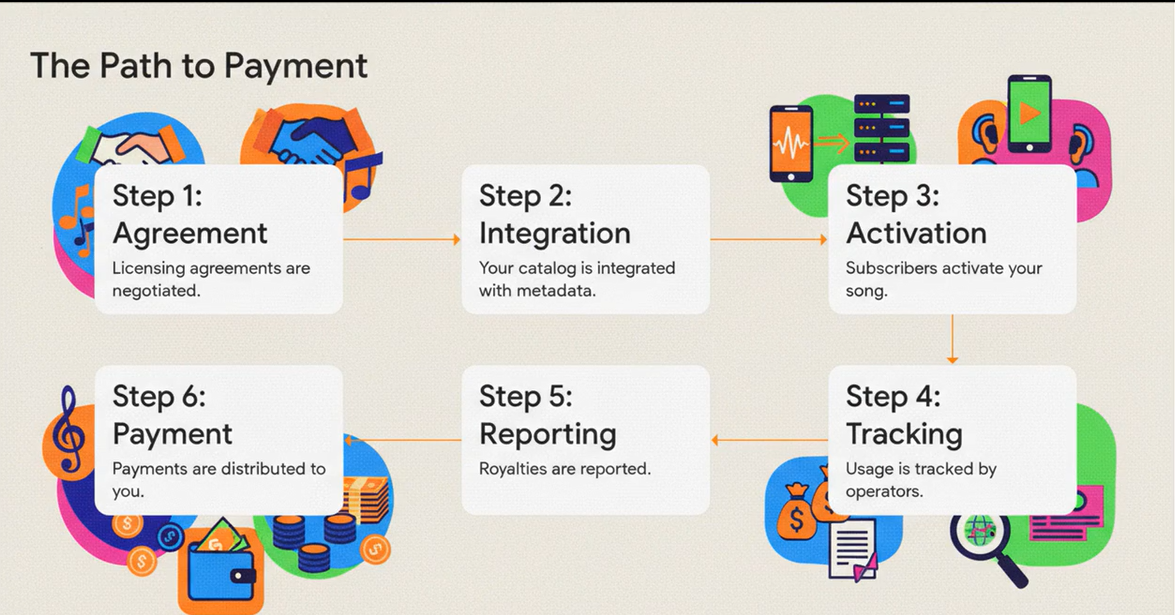
1. Agreement Negotiation: Telecom operators or content aggregators negotiate blanket licensing agreements with CMOs covering entire catalogs of music
2. Catalog Integration: Licensed music is integrated into CRBT platforms with accurate metadata (song titles, composers, performers, publishers, record labels)
3. Subscriber Activation: Users select and activate CRBTs through mobile interfaces
4. Usage Tracking: Telecom operators monitor which CRBTs are active and for how long
5. Royalty Reporting: Operators provide usage reports to CMOs detailing subscriber numbers, active periods, and revenue generated
6. Payment Distribution: CMOs collect payments from operators, deduct administration fees, and distribute royalties to rights holders based on usage data.
Accurate metadata is critical to this process. Missing or incorrect information about songwriters, composers, or rights holders can result in revenue leakage, where royalties cannot be distributed to the correct parties.
Why CRBTs Still Drive Massive Value in African Music Markets
CRBTs achieved widespread adoption across Africa for several practical reasons:
i) Accessibility Without Internet Requirements
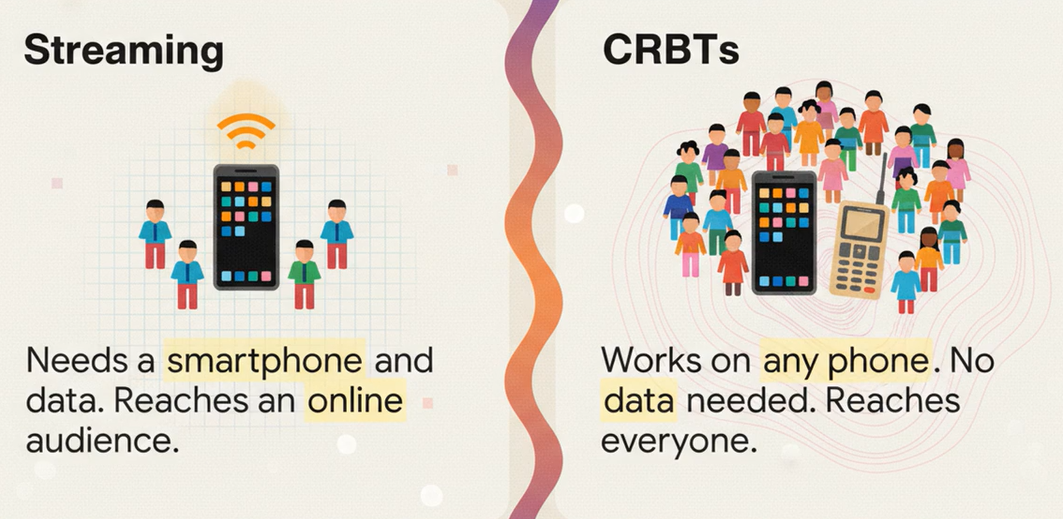
Unlike streaming platforms, CRBTs function on basic mobile phones without requiring smartphones, mobile data, or internet connectivity. This accessibility extended music monetization into rural and low-income communities where internet penetration remained limited.
ii) Reliable Revenue During Industry Transition
CRBTs emerged during a critical period when physical music sales were declining but streaming hadn’t yet scaled in Africa. They provided predictable income for artists through micro-transactions from millions of subscribers.
iii) Organic Music Discovery Through Social Networks
Songs by Nigerian artists including Burna Boy, Wizkid, Davido, Flavour, Omawumi, MI Abaga and Dbanj gained widespread recognition through CRBTs. Listeners discovered new music through everyday phone calls to friends, family, and colleagues, creating organic, social-network-driven exposure.
Current CRBT Market Trends in Africa
Rather than disappearing, the African CRBT market has evolved to fit contemporary realities. Several key trends define its current role:
- Sustained Relevance in Feature Phone Markets
Despite increasing smartphone adoption, substantial numbers of African mobile users still rely on feature phones. In markets like Kenya, mobile subscriptions exceed population size, indicating continued dependence on voice services alongside data services.
This reality keeps CRBTs commercially viable. Unlike streaming services dependent on data usage, CRBTs operate entirely within voice infrastructure, making them accessible regardless of data costs or connectivity challenges. - Enhanced Licensing Transparency and Fair Compensation Early CRBT models faced criticism over unclear royalty calculations, delayed payments, and unauthorized consumer subscriptions. Regulators in several African countries responded with stricter consent requirements and clearer revenue-sharing frameworks.
Kenya provides the most documented example of regulatory evolution. The Kenya Copyright Amendment Act of 2022 mandates that creators receive at least 52% of net CRBT revenue, with telecom operators retaining 39.5% and premium rate service providers receiving 8.5%. Kenya’s major CRBT platforms (Skiza Tunes by Safaricom and Hello Tunes by Airtel) serve millions of active subscribers. Industry reports estimate these services generate approximately KSh 7.58 billion (USD 65.8 million) in annual gross revenue, making them significant contributors to Kenya’s music economy.
Recent High Court cases in Kenya have also confirmed that mobile operators pay music owners through established premium service arrangements and have clarified regulatory expectations around artist identification and rights management on CRBT platforms. - Cultural Content Outperforms Algorithmic Reach
Not all music genres perform equally as caller tunes. Songs with strong emotional messaging, repetition, and cultural familiarity consistently dominate CRBT catalogs. Gospel music remains one of the strongest CRBT categories across Nigeria, Kenya, and Ghana. Indigenous language songs and regionally popular genres like highlife and Amapiano also perform consistently well. This pattern reveals that CRBTs reward cultural connection more than algorithmic reach. - Corporate CRBT Adoption as Branding Tools
Beyond personal subscriptions, businesses increasingly deploy corporate CRBTs as cost-effective branding tools. Instead of music, callers hear recorded messages announcing promotions, business hours, or brand messaging while waiting for calls to be answered. For small and medium-sized enterprises, corporate CRBTs transform unavoidable waiting time into direct brand communication without additional media spending. Mobile operators across Nigeria, Kenya, and South Africa now actively promote corporate CRBT packages to business clients. - Complementary Relationship with Streaming Platforms
CRBTs don’t compete directly with streaming platforms; they complement them. Industry data from telecom platforms shows that songs trending on streaming services often experience corresponding increases in CRBT subscriptions. Streaming drives discovery among internet-connected audiences, while CRBTs provide an additional monetization layer that reaches audiences who may not stream music regularly.
The Future of Caller Ring Back Tunes in Africa
While CRBTs are unlikely to return to their early peak adoption levels, they are not disappearing. Instead, they’re settling into a stable role as a niche but reliable revenue stream within Africa’s evolving digital music ecosystem.
As Africa’s digital infrastructure expands, voice communication remains central to everyday life. Data costs, network quality, and device limitations continue shaping how people engage with digital content. CRBTs occupy a unique position at the intersection of traditional telephony and digital music.
For artists and rights holders, the future value of CRBTs depends on proper licensing, accurate metadata management, and active rights administration. Every use of music generates value, but only structured licensing systems ensure that value reaches creators.
Integrating CRBTs with Modern Streaming Ecosystems
As music distribution fragments across platforms, professional licensing support becomes increasingly essential. Every commercial use of music, whether through telecom networks, streaming platforms, or media licensing, requires legal clearance and accurate rights management.
CRBTs operate on telecom billing systems and involve recurring subscription fees, requiring structured rights handling to ensure creators receive fair compensation.
Spring Sound: Maximizing CRBT Music Monetization for Artists and Rights Holders
Spring Sound stands at the forefront of music licensing in Africa, helping music creators and rights holders navigate complex licensing requirements across telecom and digital platforms.
Our services include:
• Securing necessary permissions for CRBT usage and other digital platforms
• Managing accurate metadata to ensure proper rights attribution
• Ensuring transparent reporting from telecom operators and digital services
• Preventing revenue leakage through comprehensive rights administration
We are experts in Nigerian licensing structures and have an extensive knowledge of African music rights frameworks.
By securing permissions, managing metadata, and ensuring transparent reporting, Spring Sound helps prevent revenue leakage and ensures rights owners are paid fairly across use cases that include CRBTs among other licensing channels.
Conclusion
Caller Ring Back Tunes represent one of Africa’s earliest and most practical digital music monetization models.
They show how local infrastructure realities, such as widespread mobile phone use and limited internet access, shaped innovative ways for music to reach listeners. Proper licensing frameworks made this innovation sustainable, enabling artists, labels, and rights holders to earn revenue reliably.
Even in a streaming-focused era, CRBTs continue to generate income, support artists, and provide insights into how music rights can be managed across emerging technologies.
Industry data indicates that ring back tunes accounted for a significant portion of Africa’s digital music revenue before streaming platforms dominated the market.
For African artists, understanding and actively managing every revenue stream is essential for building sustainable creative careers.
Working with professional licensing partners, such as Spring Sound Music, ensures that music is licensed correctly, creators are compensated fairly, and opportunities from CRBTs and other platforms are maximized.
As African music continues its global rise, Caller Ring Back Tunes remain a relevant revenue stream. Proper licensing, transparent royalty collection, and informed rights management will determine which artists and businesses thrive in the evolving digital music landscape.
Caller ring back tunesCorporate CRBT marketingCRBTCRBT licensing in AfricaCRBT revenue modelsMusic Licensing

1 Comment
[…] has been a rapid growth in recorded music revenue most especially in the past five years with Caller Ring Back Tone and Streaming dominating the recorded music revenue. Unfortunately, the music publishing revenue […]